A model that resolves conflict, not one that records it.
Most projects produce a model. Fewer use it to make decisions. The difference is whether clash resolution happens on a schedule with named owners and a closing-out record, or whether a clash report is issued, circulated and quietly superseded. We run coordination as a managed process with a resolution log, because the number that matters to a builder is not how many clashes were found — it is how many reached site.
Scope, by project stage.
Stated by stage so you can see exactly what is included at the point you are engaging us — and what is not.
Model and standards
- Federated model across all Lumex disciplines
- Level of development agreed and documented by stage
- Model setup aligned to the project BIM execution plan
- Shared coordinate and naming discipline maintained from the outset
Coordination
- Scheduled clash detection cycles with issue ownership
- Resolution log tracked to closure, not just reported
- Coordination workshops with the design team and, where engaged early, the contractor
- Structural penetration packages issued as coordinated sets
Documentation
- Drawings produced from the coordinated model
- Schedules generated from model data rather than maintained separately
- Consistency between model, drawings and specification
Construction phase
- Shop drawing review against the federated model
- Contractor model integration where the builder is modelling
- Change coordination through the model rather than around it
Three positions we hold on bim & digital.
These are the decisions that determine whether the package works. They are made early, and they are the ones we will argue about.
Clash counts are vanity; closed clashes are the metric
A clash report is not coordination. We run detection on a cycle, assign every issue an owner and a date, and report the closing-out position — so the design team and the builder can see what has actually been resolved.
Level of development is agreed, in writing, by stage
Most model disputes are LOD disputes that nobody had. Agreeing what will be modelled, to what development level, at which stage removes an entire category of argument from the project.
Documentation is an output of the model, not a parallel activity
Where drawings are maintained separately from the model they drift, and the drift is discovered by the installer. Schedules, sizes and geometry come from one source.
Sectors and framework.
Compliance is the floor. Constructability, maintainability and long-term value carry equal weight.
Sectors
Design framework
- ISO 19650 principles for information management
- Project BIM execution plan requirements
- Agreed LOD framework by stage
Recent projects.
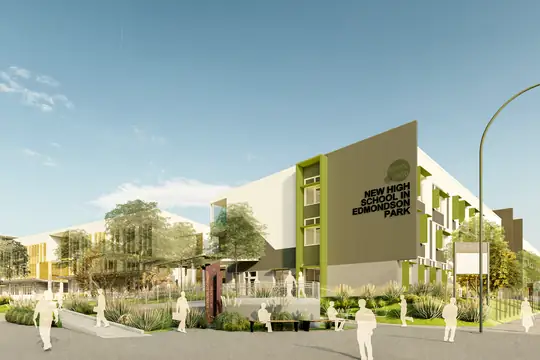
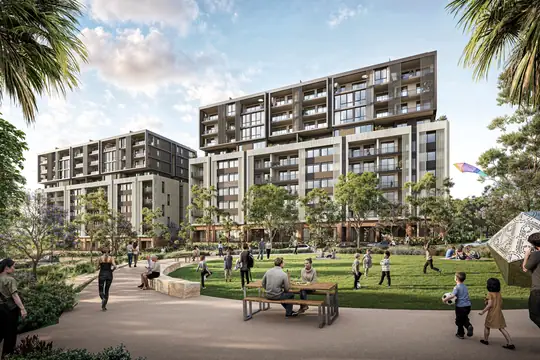
Residential, education, student accommodation, hospitality, alpine and industrial projects delivered across Australia.
All projects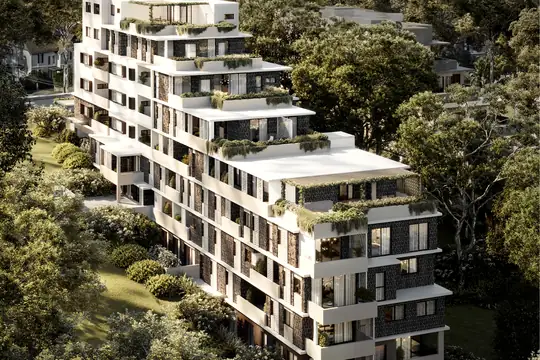
BIM & Digital Engineering.
Marked up as FAQPage structured data — the correct structure for AI answer engines as well as for search.
Yes. Where a BEP exists we work to it. Where one does not, we propose the model standards, LOD framework and coordination cycle at the start rather than improvising them.
Yes — structural, architectural, facade, vertical transport and specialist consultants are federated into the same model and run through the same clash cycle.
The current platform list is maintained on this page and confirmed by the Directors. Naming the actual toolset is more useful to a technical reader than describing it.
Where the project has a programme or cost model to integrate with, model data can be structured for it from the start. Retrofitting a model for 4D after documentation is generally not worth the effort.
Usually engaged alongside this.
Mechanical Engineering
HVAC, ventilation and thermal comfort designed for buildability, efficient plant space and long-term performance.
CFD Modelling
Computational fluid dynamics for smoke, ventilation, thermal comfort and carpark exhaust — evidence where assumption is not enough.
Passive Fire Protection
Fire separation, penetration and structural protection detailing that survives construction and passes certification.
Have a project that needs bim & digital?
Tell us the scope, the stage and the deadline. We will come back with a clear fee proposal.